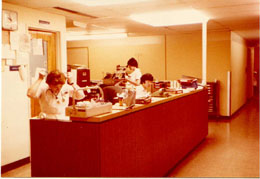
September 1977 to November 1981
My first experience with the Department of Defense and the civil service way
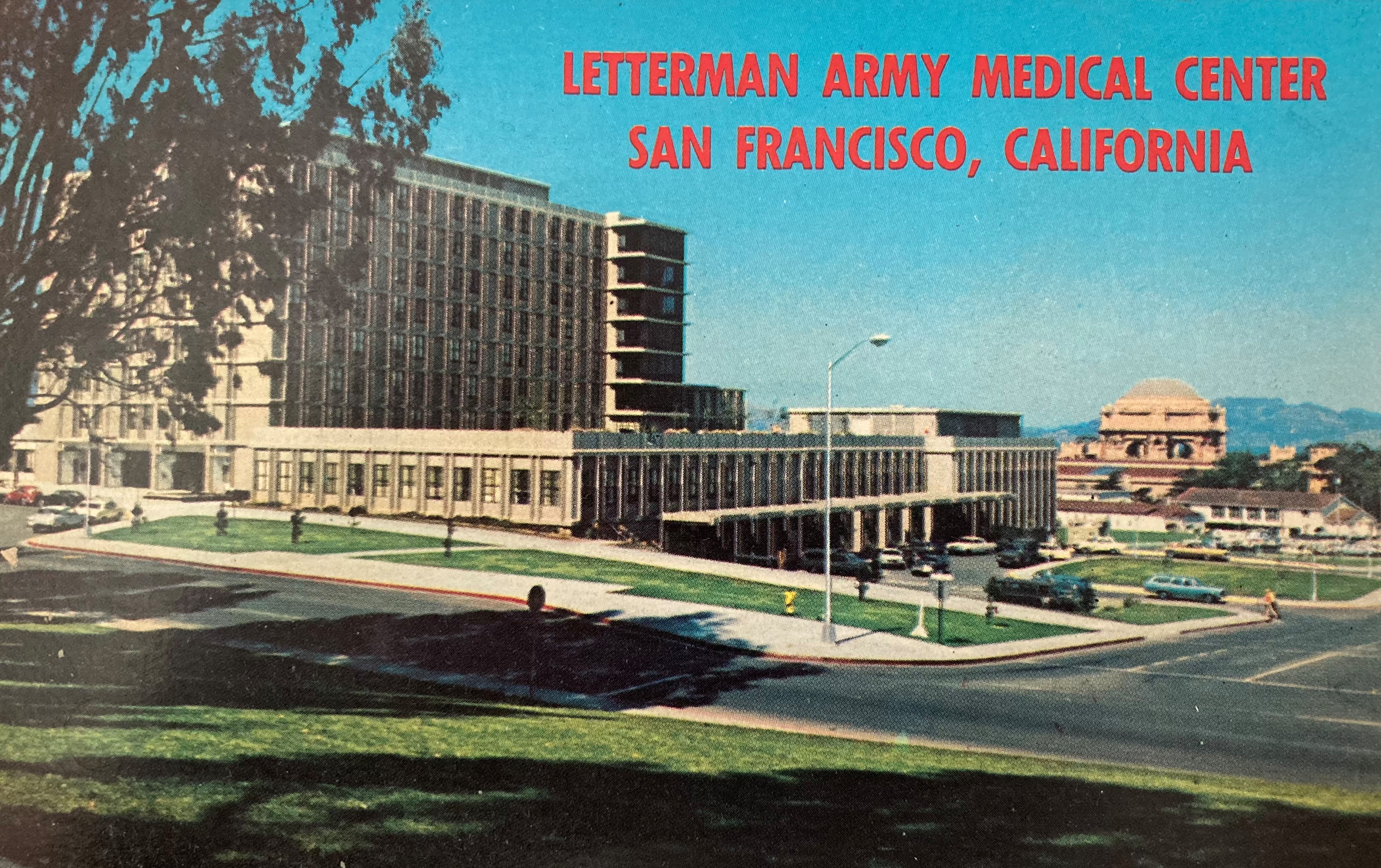
of employment began with a clerical position at the legendary Letterman
Medical Center (LAMC) in San Francisco's Presidio. Depending who you talk to,
I would be a unit clerk or a ward secretary.
During the four year
stint at LAMC I was able to memorize the hospital directory, earn the trust
of every member of the staff both military and civilian, and receive
accolades from the patients by way of letters of appreciation.
Responsibilities included
--- Checking in new patients to the floor
--- Assemble, update and maintain patient charts. When I started the
charts were made of aluminum. A few years later they were like plastic
binders
--- Arrange for patient appointments, on the unit x-rays and labwork
--- Prepare discharge and close out patient charts. Charts would then be
sent to the records room.
--- Provide clerical assistance with staff schedules, staff contact sheets,
staff correspondences
--- Interact with patients in a non-medical and non-military capacity
--- Maintain adequate stock of forms and frequently used medical supplies
--- Respond to calls from patient rooms and direct staff to address the requests
While onboard, I had the pleasure of serving five head nurses (one was
promoted to Dept. of Nursing Chief) and was supervised by three NCOIC's
(Non-Commissioned Officer in Charge). I worked closely with my counterpart
on 7 East (Dee Villaflor) as we worked just around the corner from each other.
When she retired, her replacement was the sister of fellow HS alumnus Linda
Higashi (F'72). The working chemistry did not changed. One year I
had an assistant, Suzanne Kum (later a fellow member at HOT). Her official
title was "candystriper", but she helped out by assembling admin packets and
filing in addition to her candystriping duties.
The bottom floor was where the pharmacy, the lab and the cafeteria were located.
Every now and then I would be instructed to pick up meds or run samples to the
lab. And every now and then I would need to take the stairs from the 7th
floor as it was faster by way of the stairs. My favorite reason for
visiting the bottom floor was that I was given dining privileges at the
hospital's cafeteria.
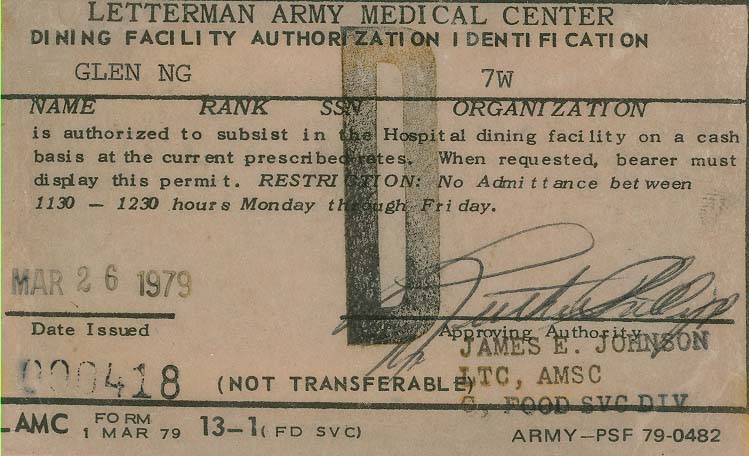
It was also where the patient's meals were cooked. The price was
reasonable and the bag lunch I'd normally bring paled in comparison to the one
or two cafeteria meals a week.
With the extra cash in hand, I made a few purchases and finally decided to get
my driver's license. Electronic items were big back in the '70s.
With the extra cash in hand, I purchased my first video game console, the Atari
2600, and my first computer. The computer cost nearly $1000 and was
manufactured by Tandy Radio Shack. It branded as the TRS-80, but was often
referred to as a TRaSh 80.
Although dating coworkers was frown upon, I dated a few of the staff members
both military and civilian. One of them was a National Guardsman from
Indiana. She inspired me to get my own car and my driver's license as it
was awkward for her to do all the driving while dating. I ended up with a
1977 red Dodge colt sedan. Came in handy when I attended my HS 5yr
reunion. Another was a fellow HS alumnus Karen Wong (S'74). She was
one of the hospital's civilian dieticians at the time. One of us would pay
for the dinner while the other would pay for the show. We continued to
date in the same manner even after leaving LAMC.
There was always a way to improve oneself in the civil service system and even
within the hospital. One mandatory class all ward clerks were required to
take, paid for for by the hospital, was Medical Terminology, a CCSF class which
allowed us to understand what we were working with. In addition to that
class I was given the green light to take military correspondence courses the
enlisted staff members took to improve themselves.
Advancement at LAMC was not uncommon. Job notices were constantly posted and applying for these jobs was as simple as
submitting an SF171 form (a government resume form). I started my DOD
career with a pay grade of GS-3, Step 1. My ending pay grade after four
years was GS-4, Step 11. Not wanting to remain
at the GS-4 pay grade, I applied for multiple jobs
(a spot with CHAMPUS and one with the Information Desk to name a few) and was
determined fully qualified for only one. To my disappointment the position was filled by someone from the same department.
It was then that I decided to go elsewhere, but I needed more education.
Night classes at Heald College-SF would be the road taken, and after two years a
shipyard would be the destination.
Upon learning of my acceptance of my transfer to Mare Island Naval Shipyard,
Major Vogele hosted a picnic at his officer's residence on base. Maybe it
was simply a coincidence. But nevertheless, my departure would be
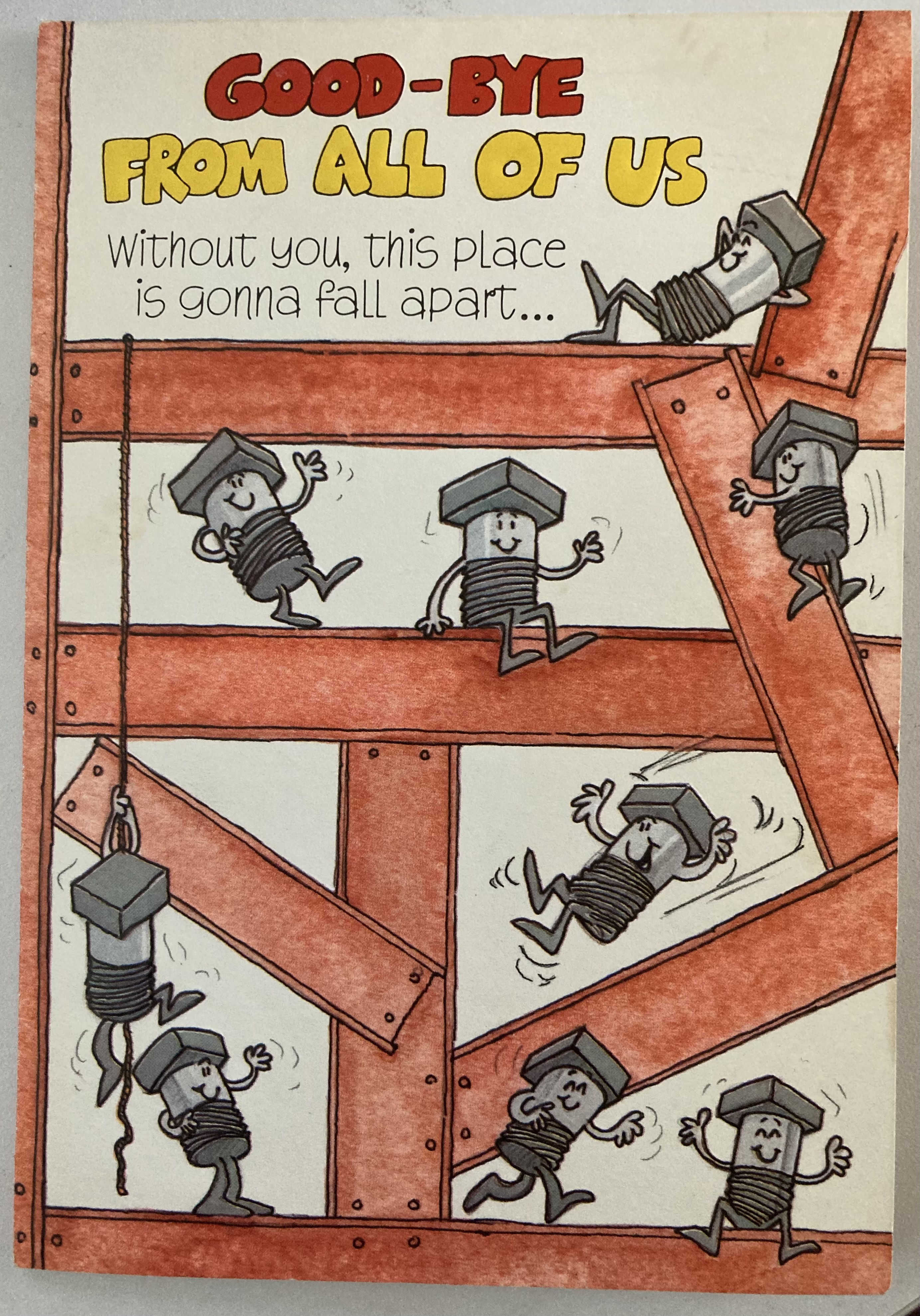
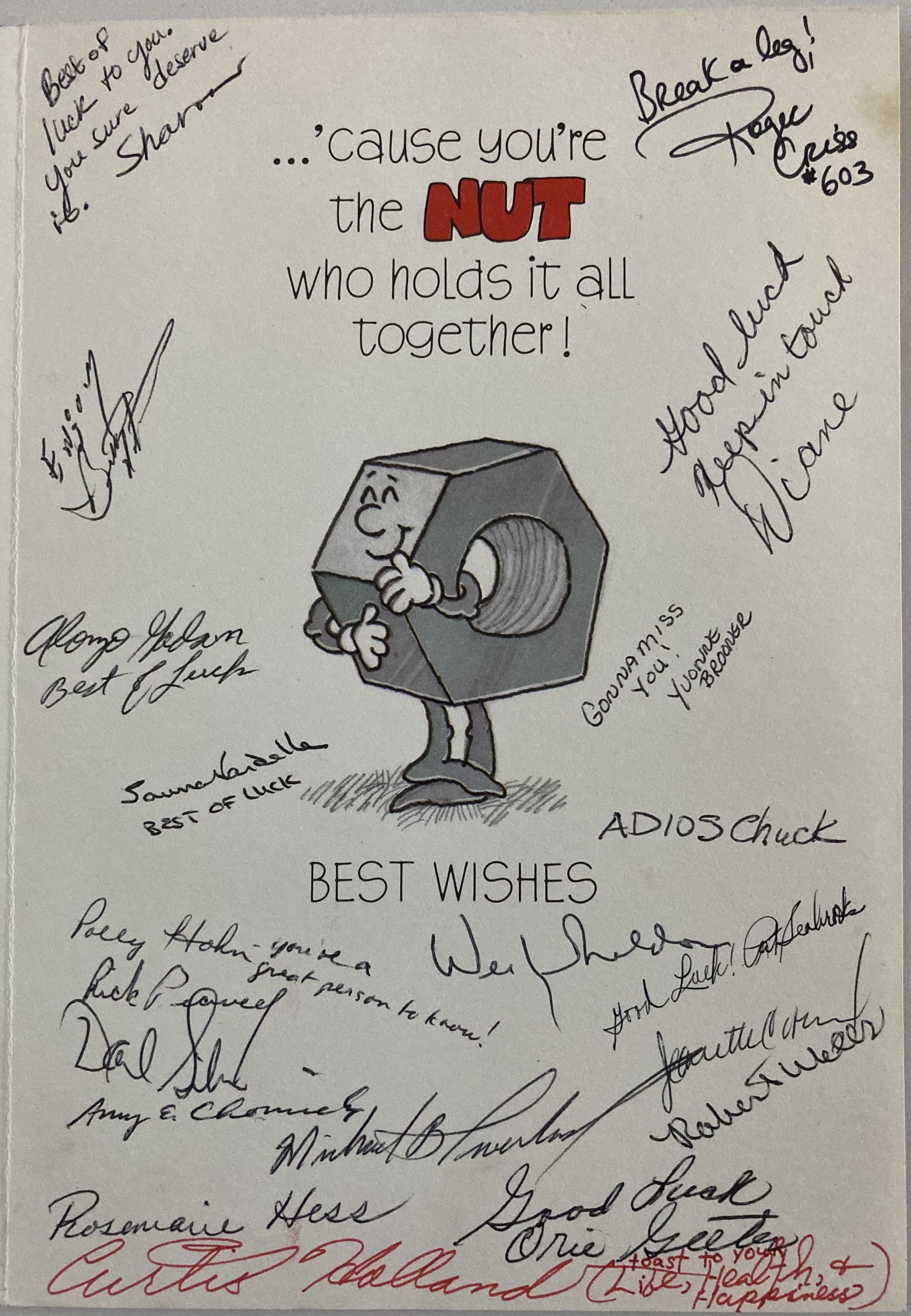
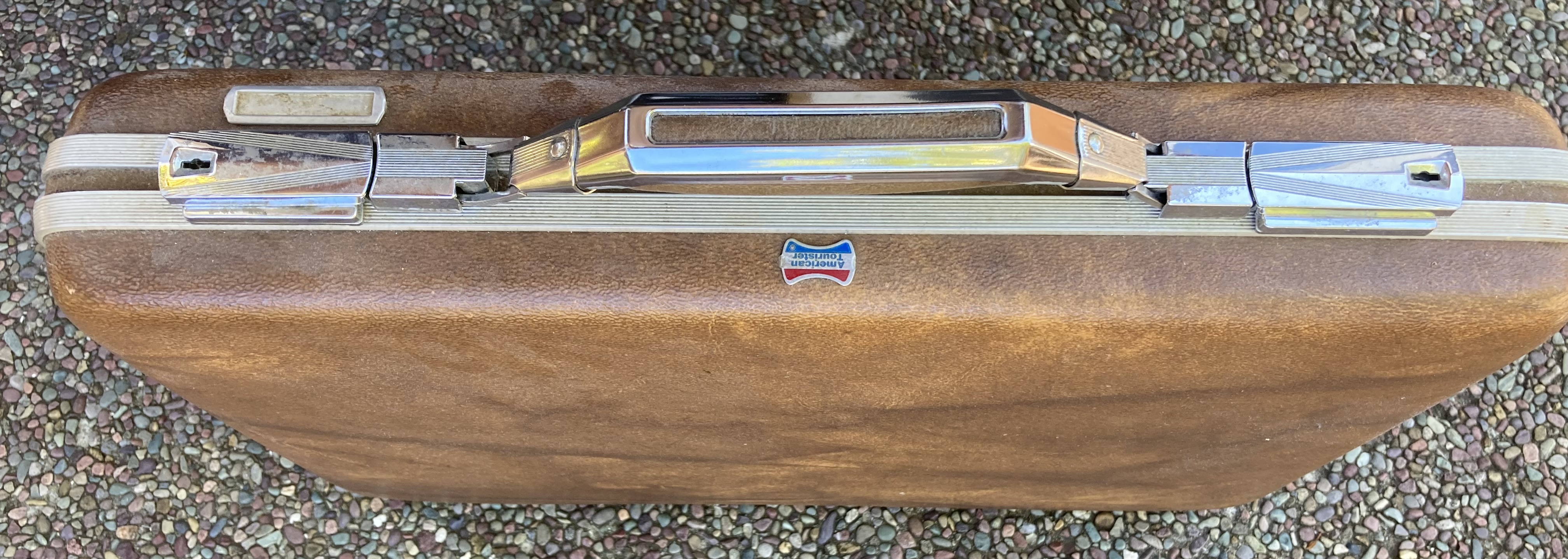
recognized with a card, signed by the staff and a couple of patients, and a
briefcase.